
A plain-language, detailed look at what neurodivergence actually is , how it shows up, why it gets missed, and what it means to live inside a mind that doesn’t follow the standard script.
By Alexander Kamp, LCSW
For a long time, society has operated under the assumption that there is a “standard” way for a human mind to work. We’ve been conditioned to believe that focus should always be a straight line, that social nuances should be intuitively understood, and that we should be able to tune out the background noise of our environments effortlessly. Yet, for a vast number of people, the internal experience feels less like a factory-setting operating system and more like a custom-coded, high-energy, and occasionally unpredictable software suite. If you have spent your life feeling as though you’re struggling to follow a manual that everyone else seems to have been born with, the most vital truth to embrace is this: your brain isn’t defective. It is simply wired differently.
For a long time, society has operated under the assumption that there is a “standard” way for a human mind to work. We’ve been conditioned to believe that focus should always be a straight line, that social nuances should be intuitively understood, and that we should be able to tune out the background noise of our environments effortlessly. Yet, for a vast number of people, the internal experience feels less like a factory-setting operating system and more like a custom-coded, high-energy, and occasionally unpredictable software suite. If you have spent your life feeling as though you’re struggling to follow a manual that everyone else seems to have been born with, the most vital truth to embrace is this: your brain isn’t defective. It is simply wired differently.
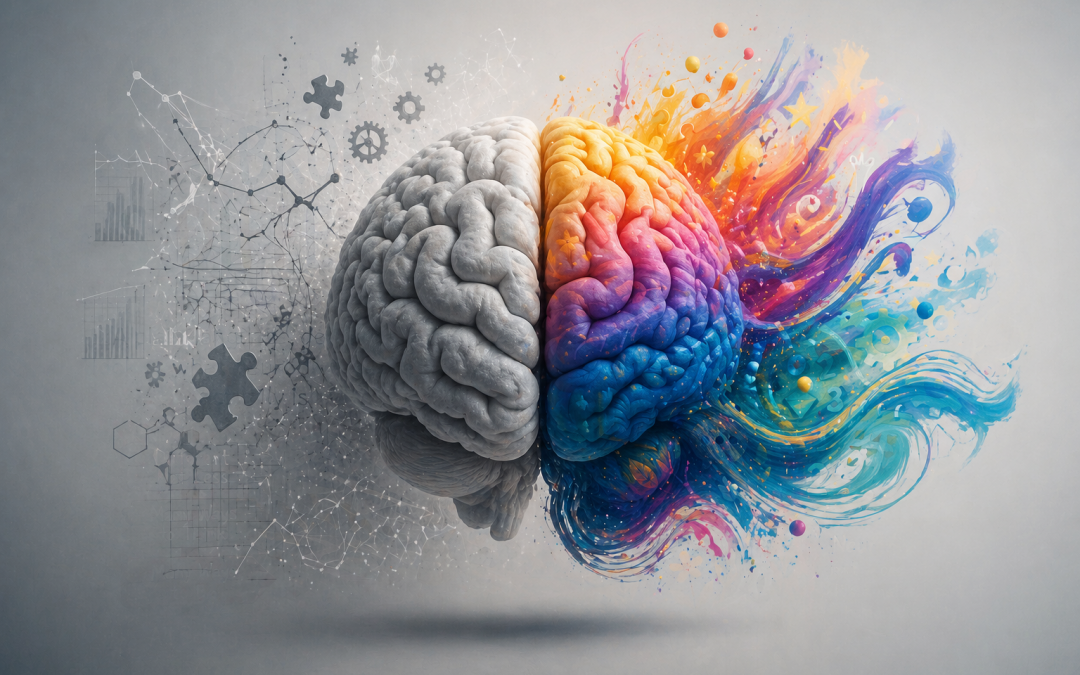
Neurodivergence is an expansive term that recognizes the natural diversity of the human brain rather than classifying every variation as a disorder. Much like the vital biodiversity found in a healthy ecosystem, neurodiversity represents the spectrum of cognitive functioning across our population. This manifests in several ways, including Attention Deficit Hyperactivity Disorder (ADHD), which is essentially a difference in how the brain regulates dopamine, affecting things like impulse control and executive function. It also encompasses the Autism Spectrum, which involves distinct ways of navigating social cues and sensory data. Other examples include dyslexia, dyscalculia, and dyspraxia, each representing a unique cognitive architecture for processing language, numbers, or physical movement.
ADHD is arguably one of the most frequently misunderstood forms of neurodivergence, often dismissed as a mere “lack of focus.” In reality, it is a challenge of regulation. While a neurotypical brain might balance tasks based on their perceived importance, an ADHD brain is primarily driven by an interest-based nervous system. It prioritizes what is novel, urgent, or intellectually stimulating. This explains the paradox of hyperfocus: the ability to lose oneself in a complex, fascinating task for hours on end, while finding it nearly impossible to spend ten minutes on a routine or repetitive chore.
From a biological perspective, these differences are often rooted in the brain’s development of neural connectivity and the process of “pruning.” In a typical brain, excess neural connections are trimmed away to make communication more efficient. However, in many neurodivergent individuals, this process occurs differently, often resulting in a brain that remains highly interconnected. While this hyper-connectivity can make a humming refrigerator or a bright light feel like an overwhelming physical intrusion, it is often the same mechanism that allows for exceptional pattern recognition, creative problem-solving, and the ability to make brilliant, non-linear logical leaps.
Navigating a world designed for a different type of brain can lead to specific forms of trauma. Developmental trauma often begins in childhood, when a person is repeatedly criticized for being “distracted” or “restless,” leading to an internalized belief that they are fundamentally flawed or lazy. Sensory trauma arises when individuals are forced to function in environments that their nervous systems find genuinely painful. Perhaps the most exhausting burden is “masking” — the constant effort to hide neurodivergent traits to blend in. Over time, this performance can lead to a fragmented sense of self and profound chronic burnout.
The objective of supporting a neurodivergent mind isn’t to “fix” it, but to provide the tools necessary to help that specific brain thrive. Executive function coaching focuses on practical strategies, like using “body doubling” or external timers to help with organization. While traditional therapy has its place, Dialectical Behavior Therapy (DBT) is often highly effective for managing the intense emotional regulation that can accompany ADHD and Autism. For those carrying the weight of past social rejection or the exhaustion of masking, Eye Movement Desensitization and Reprocessing (EMDR) can help neutralize those traumatic memories. Additionally, medication can serve as a vital tool, particularly for ADHD, by helping to stabilize dopamine and norepinephrine levels to create a more manageable baseline.
If you are beginning to realize that your mind follows its own unique logic, the most transformative step you can take is to stop fighting your biology and start accommodating it. This requires identifying your specific “friction points” without judgment. If a task like folding laundry feels impossible because it lacks dopamine, try pairing it with an engaging audiobook or doing it while on a video call with a friend. You also have the right to curate your sensory world; wearing noise-canceling tools in public or adjusting the lighting in your home aren’t “extra” needs — they are essential supports that free up your mental energy for more important things.
Adopting a schedule based on your natural interests can also be a game-changer. Rather than forcing yourself into a rigid, linear workday, try working in high-intensity bursts that capitalize on your moments of natural flow. Most importantly, seeking out a community of individuals who share your cognitive style can quickly dissolve the shame of feeling “broken.” Your brain isn’t a failed version of the “standard” model; it is a unique piece of biological architecture. When we stop trying to repair the differences and start supporting them, we move past mere survival and into a space where we can truly flourish.